





How to Improve Attorney-Paralegal Communication and Boost Firm Efficiency
The frustrations are common. Attorneys feel they have to repeat themselves, while paralegals feel they lack clear instructions or are only looped in at the last minute for a "rush" project.

In any law firm, the single most important relationship for driving efficiency isn't with the client or opposing counsel—it's the one between the attorney and the paralegal. This relationship is the engine of the practice. When communication is seamless, the firm runs smoothly, deadlines are met, and clients are happy. When it breaks down, the entire practice sputters with missed deadlines, costly errors, and team-wide burnout.
The frustrations are common. Attorneys feel they have to repeat themselves, while paralegals feel they lack clear instructions or are only looped in at the last minute for a "rush" project. The good news is that you can fix this. Improving attorney-paralegal communication isn't about lengthy meetings; it's about creating smart, efficient systems. By implementing a few key strategies, you can transform your workflow from a source of friction into a competitive advantage.
Improving Communication
Here’s how attorneys and paralegals can improve their communication to work more efficiently.
1. Define Roles and Set Clear Expectations
The most common point of failure is ambiguity. An attorney delegates a task, but the paralegal isn't 100% sure of the scope, the deadline, or the expected "definition of done."
For Attorneys: Don't just delegate a task; delegate the outcome. Instead of "Look into this," try "I need a one-page summary of the plaintiff's last three motions by 3:00 PM tomorrow so I can prepare for our status conference."
For Paralegals: Actively seek clarity. It's far more efficient to ask two clarifying questions upfront than to spend three hours redoing work. Ask, "To make sure I get this right, you need X and Y, and you want it formatted as a memo, correct?"
This simple alignment ensures everyone understands the goal from the start, eliminating guesswork and rework.
2. Create and Use Standard Operating Procedures (SOPs)
Stop reinventing the wheel for every new case. Your most common tasks—client intake, document requests, preparing discovery, closing a file—should follow a documented process.
SOPs are not meant to be restrictive; they are meant to be liberating. They create a clear playbook that empowers your paralegal to act autonomously. When a new personal injury case comes in, your paralegal doesn't need to ask, "What should I do first?" They can consult the "New PI Client Intake" SOP and immediately begin the 10-step process you've already approved. This frees up the attorney to focus on high-level legal strategy instead of project management.
3. Centralize All Communication and Tasks
Communication is inefficient when it's scattered. A task mentioned in the hallway, followed by details in an email, a correction via instant message, and a final file dropped on a sticky note, is a recipe for disaster.
Choose one source of truth. Whether it's a dedicated legal practice management (LPM) software (like Clio, MyCase, or PracticePanther) or a project management tool (like Asana), all tasks and communication *about* those tasks must live in one place.
This creates a central dashboard where the attorney can see the status of all delegated work, and the paralegal has a clear, prioritized to-do list. A simple rule: If it's not in the system, it's not a task. This also means attorneys must cc' their paralegals on relevant emails with clients or opposing counsel so the paralegal has the full context without having to ask for it.
4. Master the Art of Delegation and Feedback
How you delegate determines the quality of the work you get back. Vague, last-minute, or context-free delegation is the number one cause of inefficiency.
Use the "What, Why, and When" method:
- What: Clearly define the task.
- Why: Explain the context. ("I need this research because...") This helps the paralegal spot issues you might have missed.
- When: Provide a firm, realistic deadline.
Equally important is the feedback loop. Don't just interact when something is wrong. Schedule a brief, 15-minute weekly check-in to review workflows. What's working? What's causing bottlenecks? This collaborative approach builds trust and allows for continuous, small improvements that add up to massive efficiency gains.
5. Implement a 10-Minute Daily Huddle
Many "urgent" interruptions can be avoided by one brief, structured check-in. Start each day with a 10-minute huddle (in-person or virtual). This is not a long, meandering meeting. It’s a rapid-fire sync-up to align priorities.
Use this simple agenda:
1. What is your #1 priority for today?
2. Are you facing any roadblocks I can help clear?
3. Are there any urgent updates I need to know?
This simple meeting ensures both attorney and paralegal are working from the same priority list. The attorney knows what the paralegal is focused on, and the paralegal learns about potential new priorities *before* they become last-minute emergencies.
Ready to Stop Managing Chaos and Start Practicing Law?
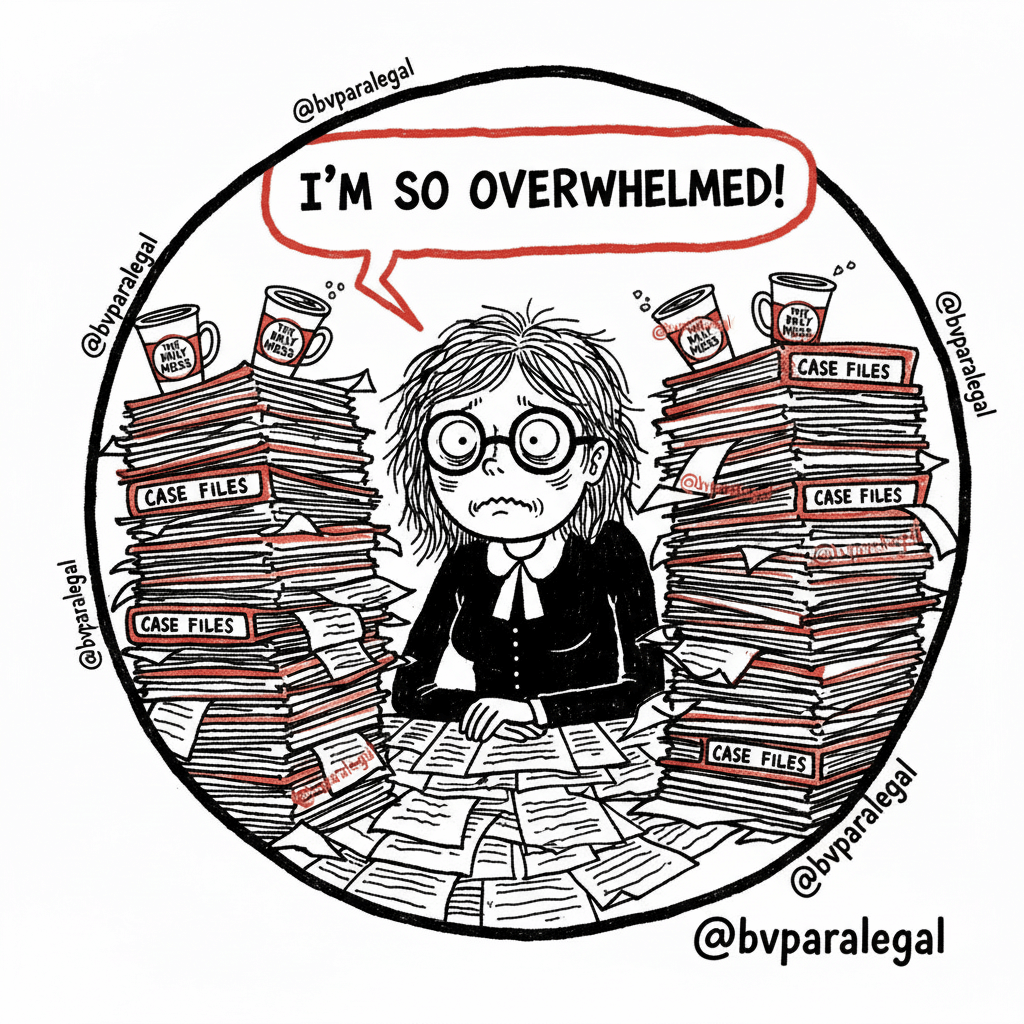
Implementing these communication systems will dramatically boost your firm's efficiency. But what if the core problem isn't just how you communicate, but how much you have to manage?
When your internal team is at capacity, even the best communication protocols can't solve the problem of being overworked. This is where Best Virtual Paralegal steps in.
We provide highly skilled, U.S.-based virtual paralegal support that integrates seamlessly into your practice. Our experienced paralegals don't just take tasks; they manage complex workflows. From handling discovery and litigation support to drafting critical documents and conducting legal research, we provide the expert support you need, exactly when you need it.
Stop letting communication bottlenecks and administrative overload slow you down. It's time to get the support that frees you up to focus on what you do best: winning cases for your clients.
Contact Best Virtual Paralegal today to discover how our expert supportive services can streamline your workflow and supercharge your firm's efficiency!

Ready to lighten your caseload? Let’s talk support.
With a career spanning three decades, Holly A. Sheriff is on a mission to shake up the legal support industry. As the founder of Best Virtual Paralegal LLC and an award-winning Litigation Paralegal, Educator, and Certified Master Coach, Holly dedicates her expertise to empowering legal professionals to build successful and fulfilling careers.

Disclaimer
The content on this blog is provided by professionals for general information and educational purposes only. It is intended for lawyers, paralegals, and other professionals connected to the legal community in the USA. This information does not constitute legal or other professional advice and should not be used as a substitute for seeking services from a licensed professional.
This content may not reflect the most current legal developments and is not intended as a practice guide. Readers should not rely on this information to answer legal questions concerning actual client situations. All practitioners must consult primary and secondary sources of state law before relying on this information for specific client matters. Best Virtual Paralegal is not responsible or liable for any information provided by the blog's authors or contributors.

We're social bunch
"Want the inside scoop? Our Facebook page and blog are where the experts hang out."