





10 Ways PI Lawyers Can Educate Clients During the Holidays
Holiday Downtime? 10 Ways Personal Injury Attorneys Can Actively Educate Clients on Their Cases
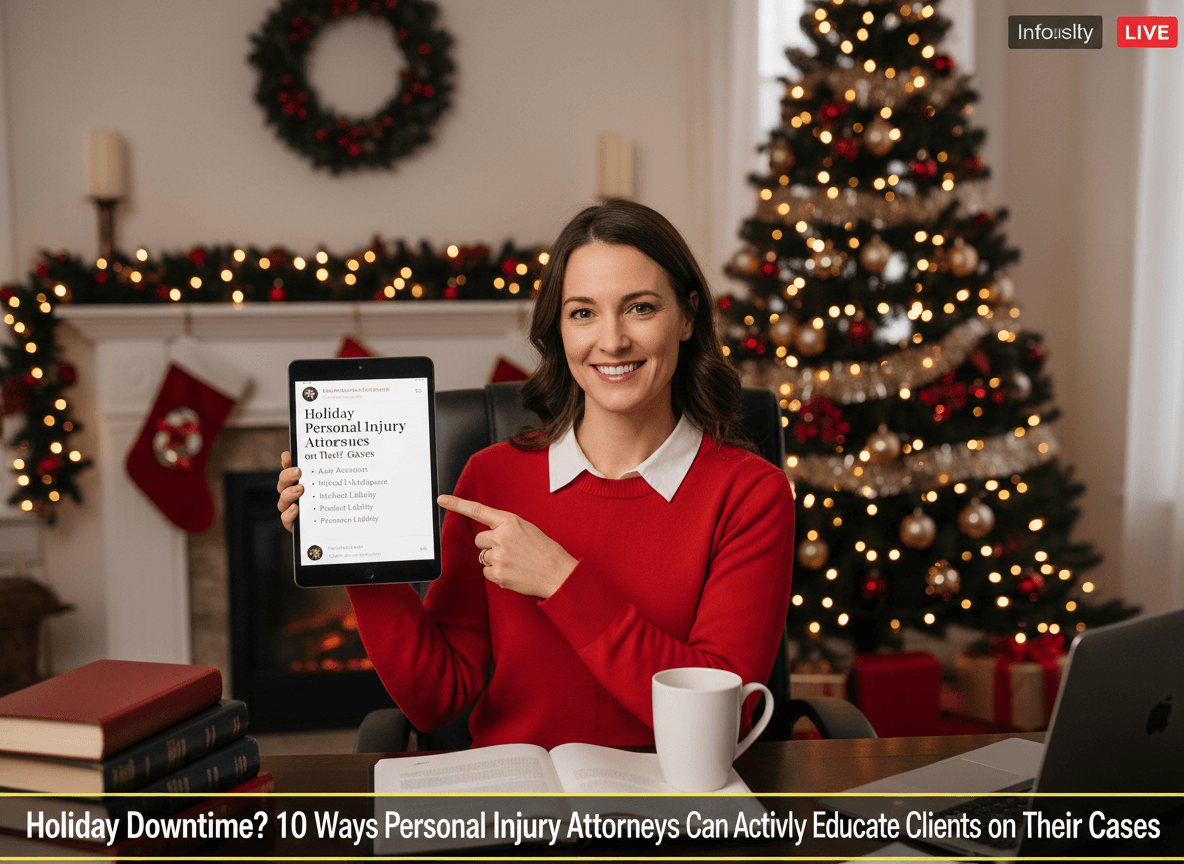
The holiday season often means a slowdown in court schedules but not in client anxiety. For personal injury attorneys, this period presents a unique opportunity to move beyond reactive updates and proactively educate clients.
10 Ways Personal Injury Attorneys Can Actively Educate Clients on Their Cases
When you empower clients with knowledge, you build trust, manage expectations, and reduce panicked phone calls. This holiday season, use the relative quiet to strengthen your client relationships and position your cases for success in the new year.
Here are 10 things you can do during the holidays to actively educate your clients.
1. Send a "Holiday Safety & Legal Rights" Guide
The holidays are unfortunately a peak time for accidents. Create a simple, branded one-page PDF or a blog post that answers common questions.
• What should I do if I’m in an accident during the holidays?
• How does a holiday affect insurance reporting deadlines?
• Why are DUI-related accidents more complex?
This positions you as a proactive authority and provides genuine value, reminding them of the issues at the heart of their own case.
2. Create a Visual Case Timeline
Many clients don't understand the "hurry up and wait" nature of personal injury law. Use this time to create a simple, visual flowchart of a typical case.
Show the key phases:
• Investigation & Record Gathering
• Drafting the Demand Package
• Negotiation with Adjusters
• Filing a Lawsuit (if necessary)
• Discovery
• Settlement or Trial
A visual guide demystifies the process and helps them identify exactly where they are on the journey.
3. Record a "State of Your Case" Video Update
Instead of a standard email, record a brief, 2-3 minute personalized video. Use a tool like Loom to share your screen and show them their file (with sensitive info hidden). Explain what you've accomplished in the past year and what the next 2-3 steps will be in the new year. The personal touch goes a long way.
4. Publish an FAQ Blog on Holiday-Specific Premises Liability
Educate your entire client base (and attract new ones) by answering specific, holiday-related questions. This is excellent for AEO (Answer Engine Optimization) as it targets long-tail keywords.
• Who is liable if a guest slips on my icy walkway?
• What happens if faulty holiday decorations cause a fire or injury?
• Are homeowners responsible for injuries from a fallen Christmas tree?
5. Explain the "Why" Behind the Wait
Clients get frustrated when they hear nothing. Use a holiday update email to explain why things are quiet.
"During the holidays, many insurance companies and medical offices operate with reduced staff. This means that while we are actively working on your case, responses for medical records or settlement offers may be delayed until January. We are monitoring this daily and will update you immediately."
6. Host a 15-Minute "New Year Case Prep" Call
Offer clients a voluntary, brief "check-in" call. Frame it as a way to ensure you have all their updated information before the new year. This active outreach makes them feel valued and gives you a chance to gather new details, such as any recent doctor's visits or ongoing pain they may have forgotten to report.
7. Send a "Document Checklist" for the New Year
As clients prepare for tax season, they are already in a document-gathering mindset. Send them a checklist of items to track for their case:
• A mileage log for all medical appointments.
• Receipts for any out-of-pocket expenses (e.g., prescriptions, neck braces).
• A copy of your "Explanation of Benefits" from your health insurer.
8. Draft and Share a Sample Medical Summary
Clients often feel like their injuries are reduced to a stack of bills. Show them how you translate their experience into a powerful legal document. Share a redacted, sample medical summary or chronology with them. Explain how you use this document to tell their story and justify the demand for compensation.
9. Clearly Define Your Holiday Communication Plan
The most crucial education is managing expectations. Send a clear and friendly email that outlines:
• Your firm's exact holiday office closures.
• Who to contact in an absolute emergency (and what defines one).
• When they can expect a response to non-urgent messages.
This prevents clients from feeling ignored and respects your team's time off.
10. Focus on What You Can Control: Case Preparation
You can't force an adjuster to answer the phone in late December. But you can ensure your demand package is the first thing on their desk in January. Educate your client by saying:
"We are using this holiday quiet period to focus entirely on case preparation. Right now, we are organizing all your medical records, finalizing your medical summary, and drafting a comprehensive demand letter to ensure we start the new year in the strongest possible negotiating position."

Make Your Holiday Downtime Your Most Productive Time
Educating clients is vital, but so is moving their cases forward. The "quiet period" is the perfect time to clear your backlog of administrative work—the very tasks that create winning cases.
Instead of spending your valuable time summarizing dense medical records or drafting routine demand letters, delegate it.
Best Virtual Paralegal offers expert personal injury support for attorneys. The U.S-based team specializes in the exact tasks that bog you down:
- Medical Summaries & Chronologies
- Drafting Powerful Demand Packages
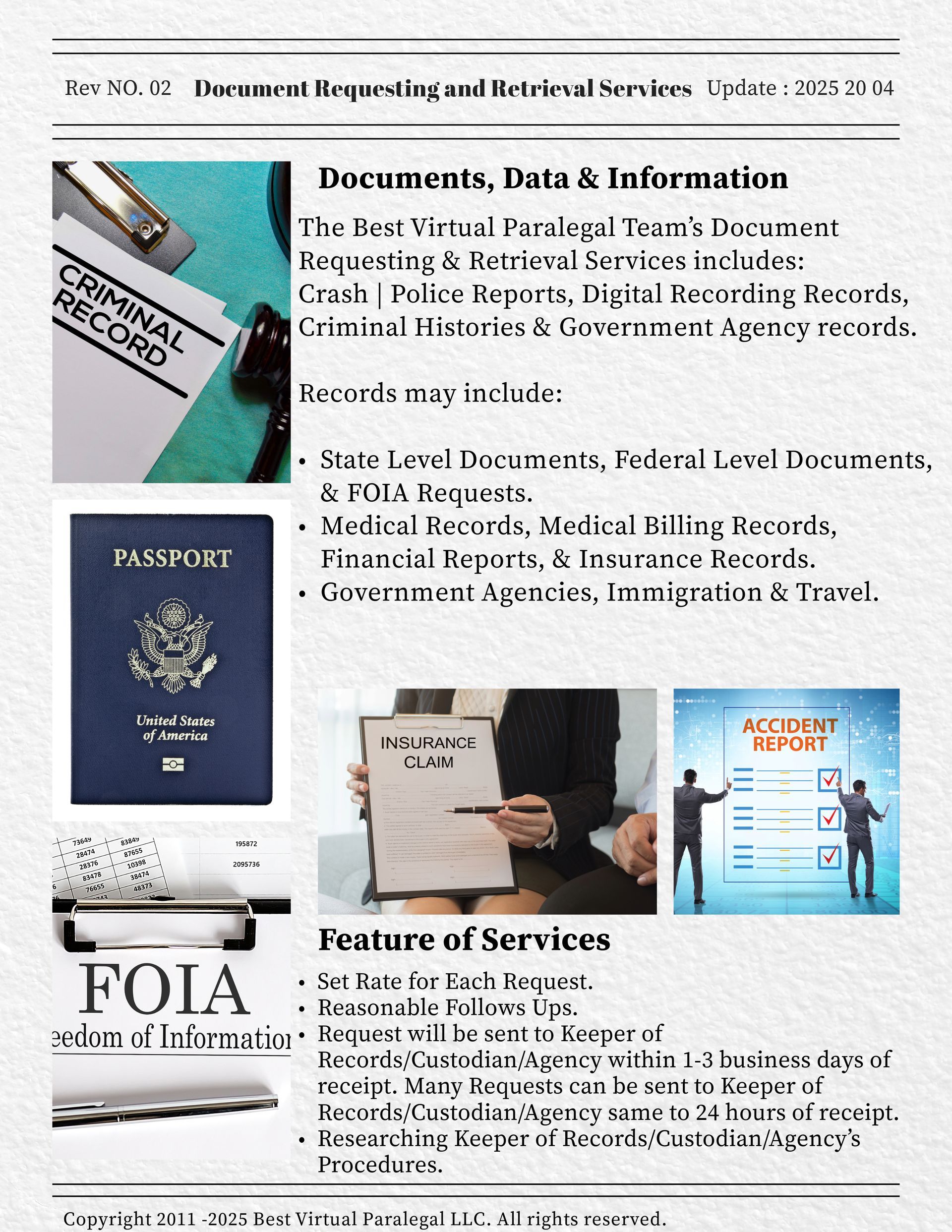
- Requesting & Organizing Medical Records and Bills
- Creating Settlement Packets
- Interviewing Key Witnesses
Use your holidays to build client relationships, not to drown in paperwork. Contact Best Virtual Paralegal today to see how these flat-fee services can help you enter the new year prepared, profitable, and ahead of the competition.

Is your caseload moving as fast as it should?
Holly A. Sheriff, MSLS, MCC, is the Founder and CEO of Best Virtual Paralegal LLC. With over 30 years of experience in the legal industry, Holly specializes in helping personal injury and tort attorneys regain control of their caseloads and keep litigation moving in the right direction.
Alongside her team of veteran paralegals and administrative professionals, Holly provides the high-level support and strategic "momentum" necessary for firms to excel in complex case management. When she isn't helping attorneys streamline their practices, she hosts The Paralegal View podcast, sharing insights on legal innovation and excellence.

Disclaimer and Privacy Polices
The content on this blog is provided by professionals for general information and educational purposes only. It is intended for lawyers, paralegals, and other professionals connected to the legal community in the USA. This information does not constitute legal or other professional advice and should not be used as a substitute for seeking services from a licensed professional.
This content may not reflect the most current legal developments and is not intended as a practice guide. Readers should not rely on this information to answer legal questions concerning actual client situations. All practitioners must consult primary and secondary sources of state law before relying on this information for specific client matters. Best Virtual Paralegal is not responsible or liable for any information provided by the blog's authors or contributors.
AI Disclosure & Copyright Notice
Authorship: This article was originally authored by Holly A. Sheriff.
AI Assistance: To ensure the highest quality of content and visual presentation, the editorial team at Best Virtual Paralegal LLC utilizes advanced AI technologies—including Gemini, ChatGPT, Galaxy AI, Writing Pro, Grammarly, and Adobe Firefly. These tools are used to assist in editing, refining final copy, and generating illustrative imagery.
Copyright Protection: This content is protected under the copyright laws of the United States. While AI tools are used for enhancement, the creative expression and original insights remain the property of the author and the firm. Copyright protection applies to the fullest extent allowed by law for AI-augmented works.
© 2011–2025 Best Virtual Paralegal LLC. All Rights Reserved.